How to Say Hello and Thank You in Thai (Sawasdee & Khop Khun)
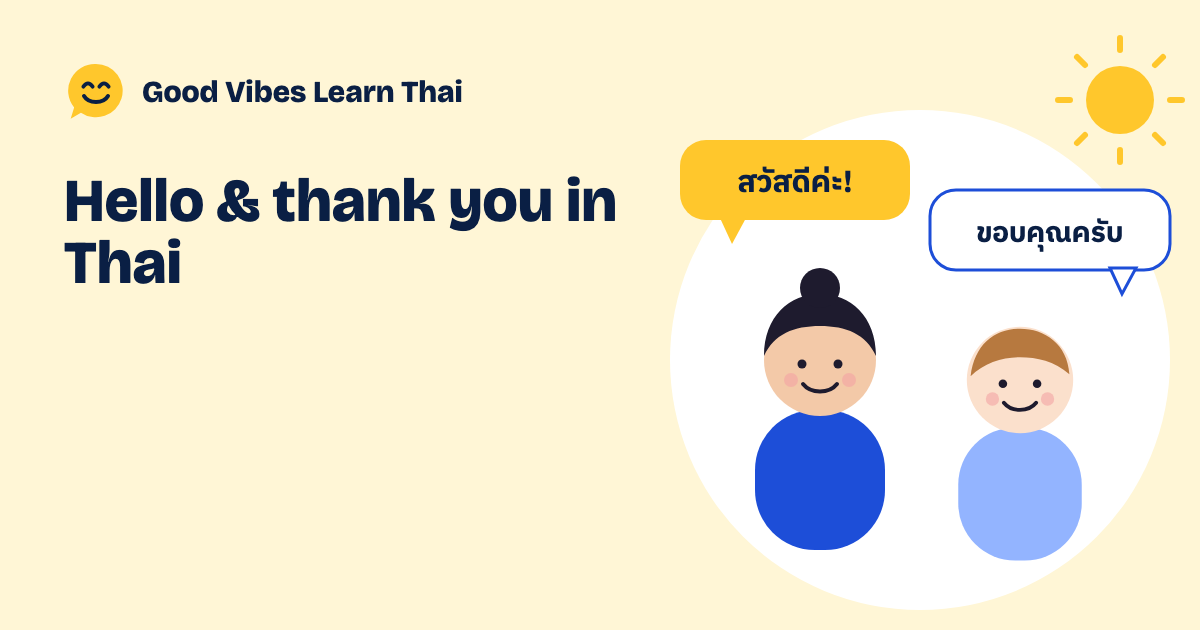
Saying thank you in Thai and hello in Thai is the fastest way to make a Thai person smile — especially your partner's family. The good news: you only need four words to sound polite and warm. Here's how to say them right, from a native Thai teacher in Melbourne.
Hello in Thai: sawasdee (สวัสดี)
สวัสดี — sà-wàt-dee means hello, and it also works for good morning, good evening and even goodbye. Thais use it all day, so you don't need a different greeting for each time of day.
On its own, sawasdee can sound a little blunt. Thais add a polite word at the end, and which one you use depends on who is speaking, not who you're talking to:
| You are | Say | Sounds like |
|---|---|---|
| A man | สวัสดีครับ | sà-wàt-dee khráp |
| A woman | สวัสดีค่ะ | sà-wàt-dee khâ |
Tip: in everyday speech many Thais soften khráp to kháp. Both are fine.
Thank you in Thai: khop khun (ขอบคุณ)
ขอบคุณ — khòp-khun means thank you. Add the same polite ending:
- Men: ขอบคุณครับ — khòp-khun khráp
- Women: ขอบคุณค่ะ — khòp-khun khâ
- Thank you very much: ขอบคุณมาก — khòp-khun mâak (+ khráp / khâ)
You'll also hear ขอบใจ — khòp-jai. It's a friendly, casual thanks that older people use with younger people. Stick with khòp-khun with your partner's parents.
What to say when someone thanks you
The classic reply is ไม่เป็นไร — mâi pen rai. It means "no worries", "you're welcome" and "it's fine" all in one — very Aussie, really. You can also use it when someone says sorry to you.
The wai: the greeting with your hands
With older people, Thais often greet and thank with a wai: palms together like a prayer, a small bow of the head. A few simple rules:
- The younger person usually wais first — so with your partner's parents, that's you.
- Bring your hands to chest or chin height and smile. Higher hands show more respect.
- If someone wais you, it's polite to wai back. You don't need to wai children or shop staff first.
Saying sà-wàt-dee khráp with a wai to your partner's mum is one of the easiest ways to make a great first impression.
Two more phrases that go with hello
- How are you? สบายดีไหม — sà-baai dee măi (+ khráp / khá — women use the rising khá for questions)
- I'm good: สบายดี — sà-baai dee (+ khráp / khâ)
Put it together and you already have a mini conversation: sà-wàt-dee khâ, sà-baai dee măi khá?
Thank you in Thai for everyday situations
The same khòp-khun works almost everywhere, but here's how it sounds in real life:
- After dinner with your partner's family: khòp-khun khâ, à-ròi mâak — thank you, it was delicious. This one wins hearts.
- At a Thai restaurant in Melbourne: khòp-khun khráp when the food arrives and again when you pay.
- When someone gives you a gift: khòp-khun mâak khráp / khâ, and receive it with both hands.
- To a close friend your own age: khòp-khun ná sounds warm and relaxed — the little ná softens it.
Using it often is a good thing. Thais say thank you a lot, and every time you do it in Thai, you show you're making an effort.
Common mistakes Aussies make
- Forgetting khráp / khâ. Without it, Thai can sound abrupt. Add it to almost everything when you're starting out.
- Men saying khâ (or women saying khráp). It's a common, friendly mistake — Thais will smile, but now you know.
- Reading the romanisation like English. The kh in khòp-khun is a soft k with a breath, not a hard "c-h".
Keep going
Want the next step? Our free PDF has 20 Thai phrases for meeting your partner's family, with Thai script, easy pronunciation and culture tips. Or read Thai phrases for meeting your partner's family.
Keep learning
 12 Thai Phrases for Meeting Your Partner's FamilyGreet, thank and charm your partner's mum and dad — the Thai phrases that matter most at the family table.
 How to Learn Thai in Australia (Without Moving to Thailand)You don't need to move to Bangkok to speak Thai. Here's a simple plan that works from Melbourne, Sydney or anywhere in Australia.